Academic Machines
“A lenticular logic is a covert racial logic, a logic for the post-Civil Rights era. [...] a logic of the fragment or the chunk, a way of seeing the world as discrete modules or nodes, a mode that suppresses relation and context.”
Layers of Computing
Humans have long explored purpose-built "analog" computers that perform specific tasks. Before calculators, this work was completed by human computers — often skilled women employed by Universities. Claude Shannon and Alan Turing released the first papers about digital computers.
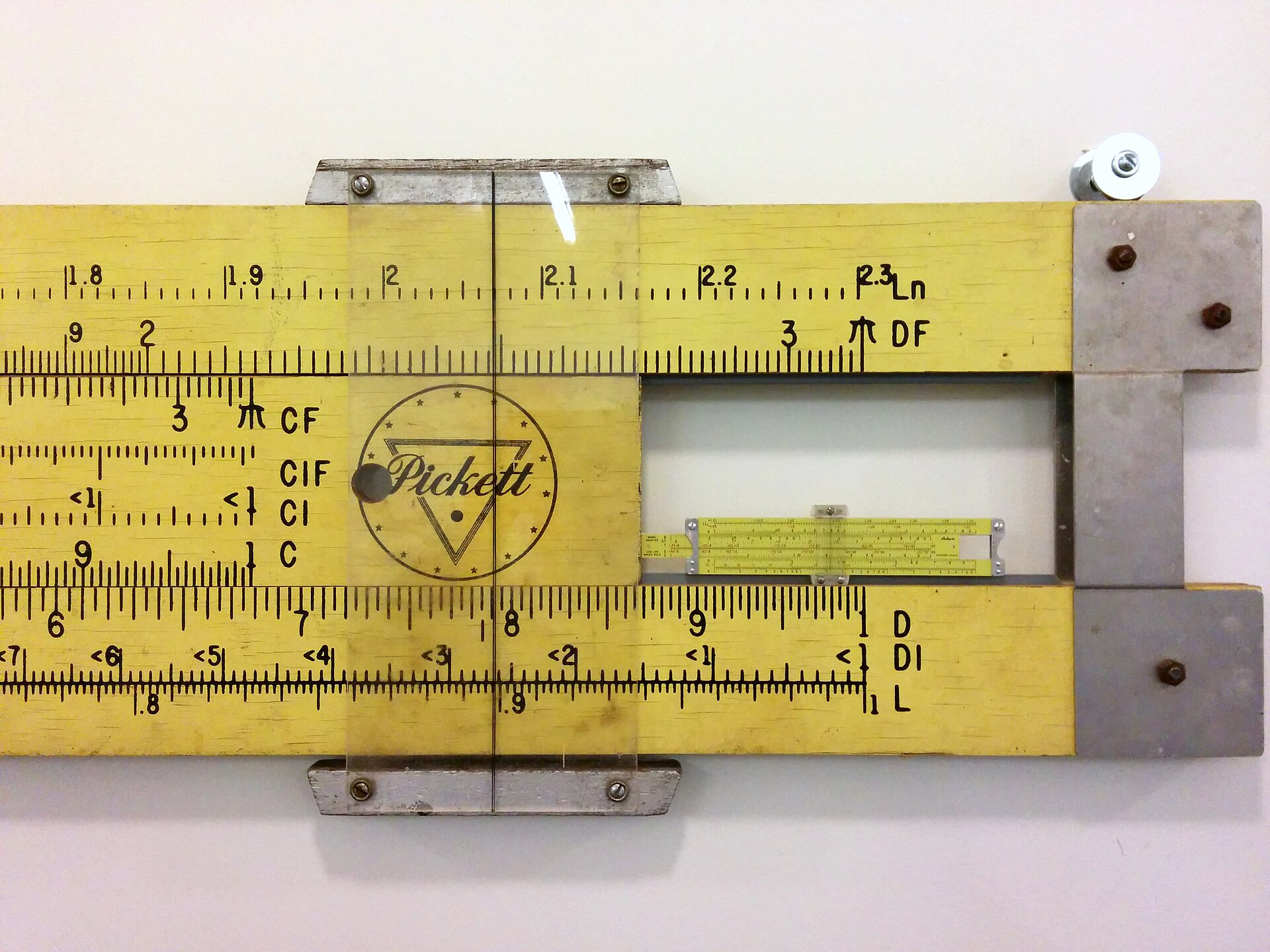
Analog computers relied on physical properties and moving mechanisms to process data. Instead, digital systems harnessed electrical signals to process data based on rules and logic.
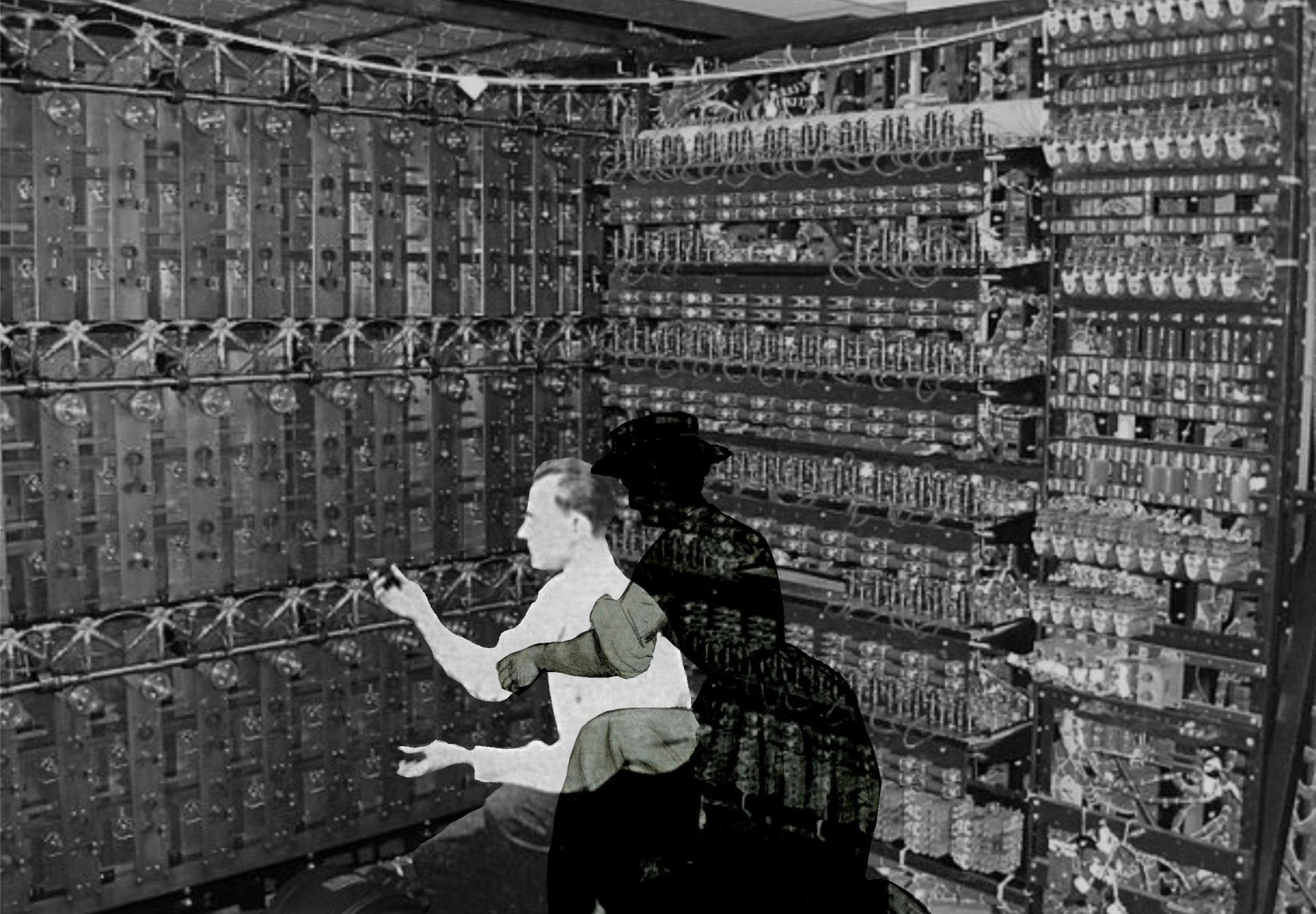
ENIAC was created to calculate missile trajectories and perform thermonuclear weapon tests. The US Army made ENIAC available free-of-charge for university research studies. Women were the first programmers tasked with coding these computer systems.
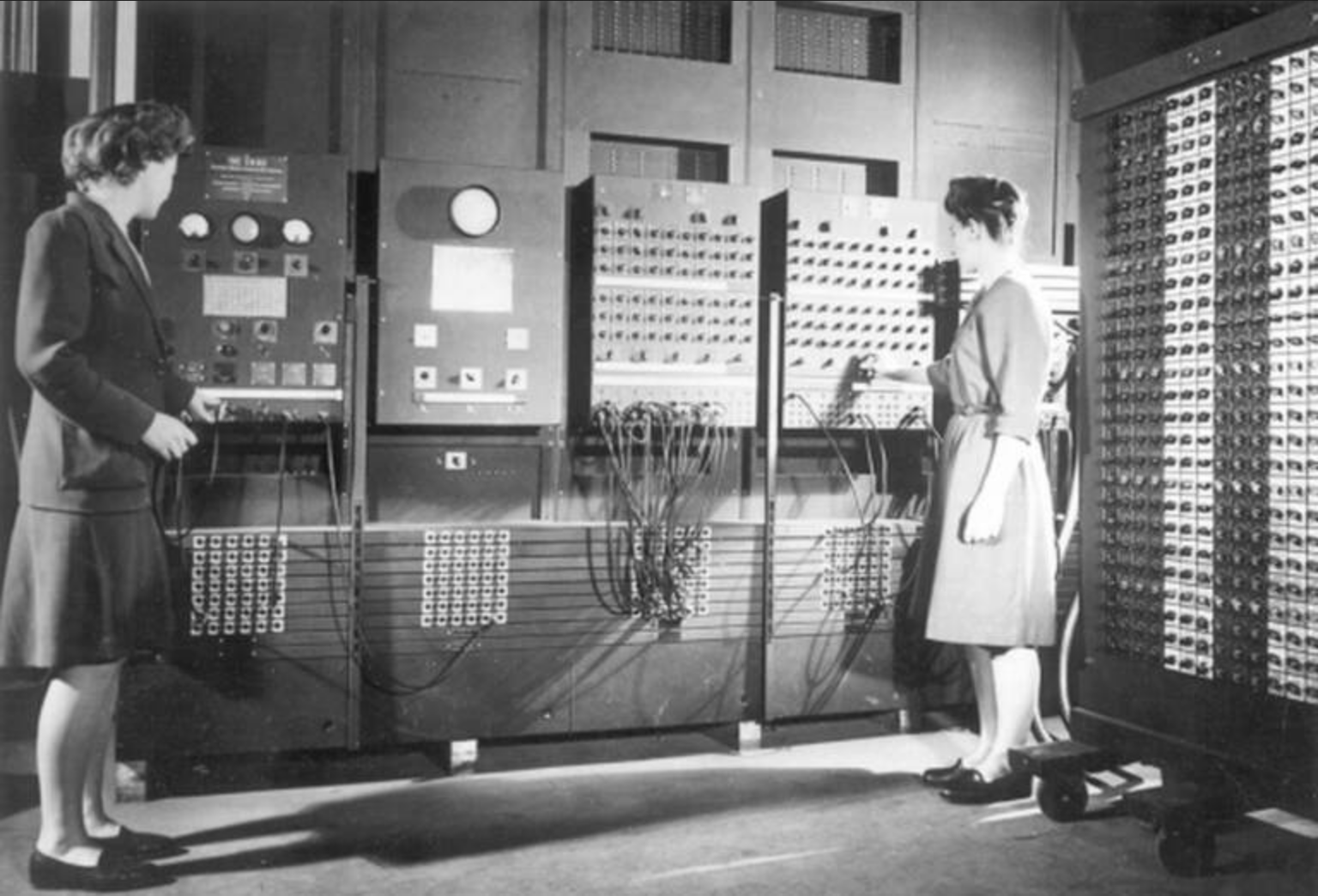
John von Neumann’s prematurely disseminated paper in 1945 described EDIVAC, a successor to ENIAC. This created discrete modules within the computer that needed to remain in communication with each other. This enabled technologies like storage, memory, processing and networking to rapidly proliferate along numerous independent pathways.
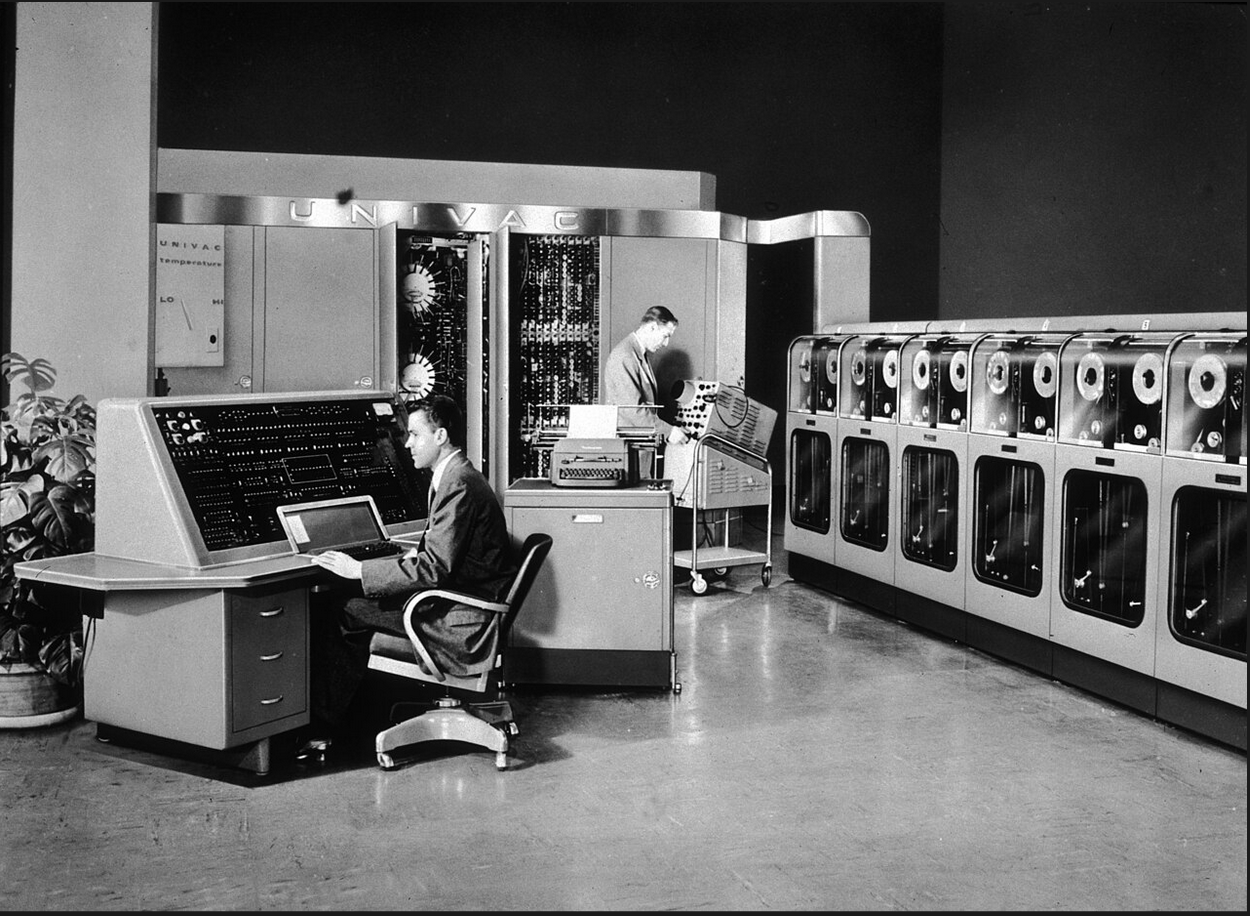
Through the 1960s, computer development shifted towards making them smaller and more accessible. While the first computers filled entire rooms, second-generation "transistor" computers were relatively compact.
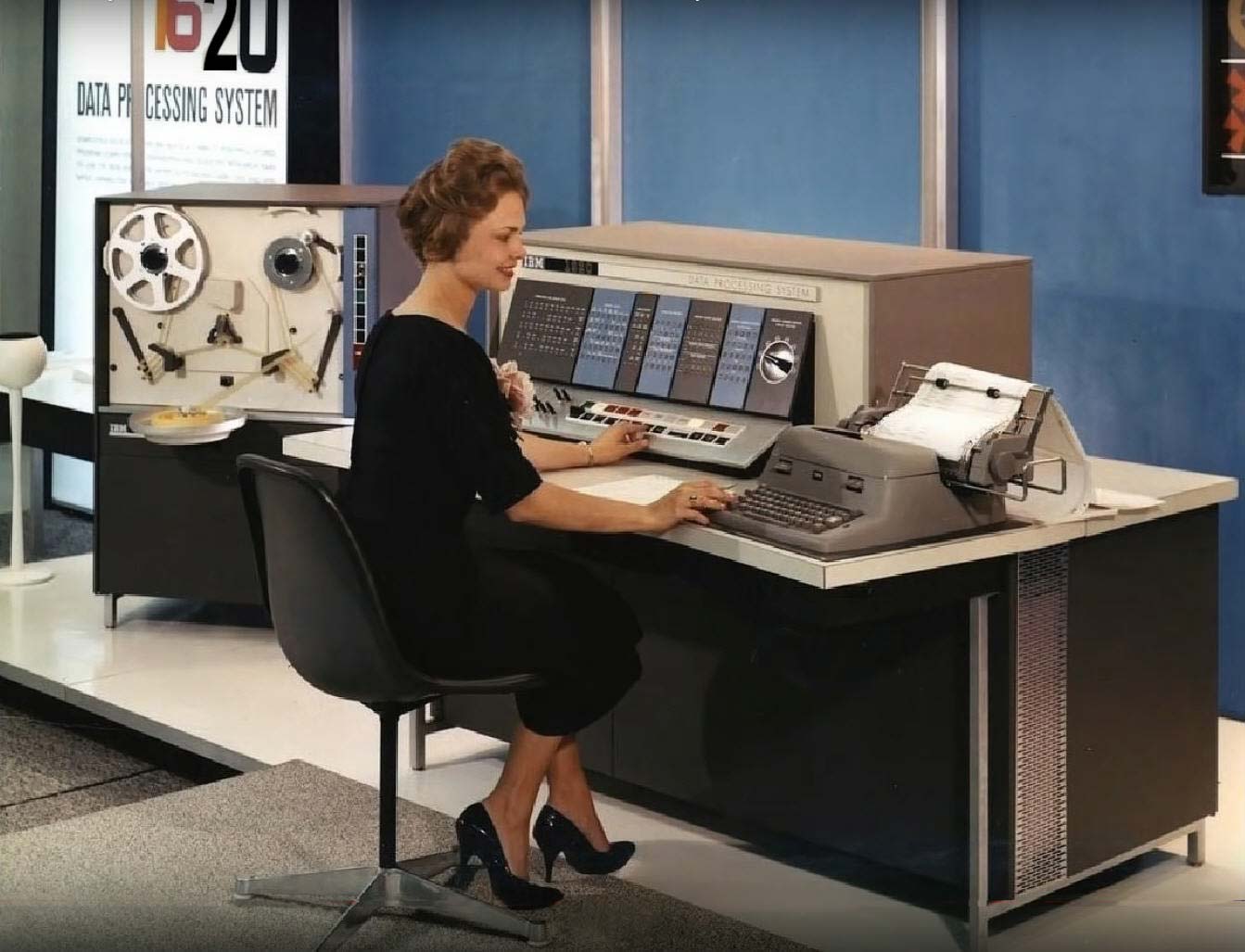
Consistent hardware advances let computers perform increasingly complex tasks. However, software revolutionized the ways we approached "work" on the computer. The first systems could only run programs in sequence and needed to completely finish a task before moving onto the next. This created a bottleneck where the computer could only be used for one task at a time. If a program required days to compute, individuals needed to wait in line.
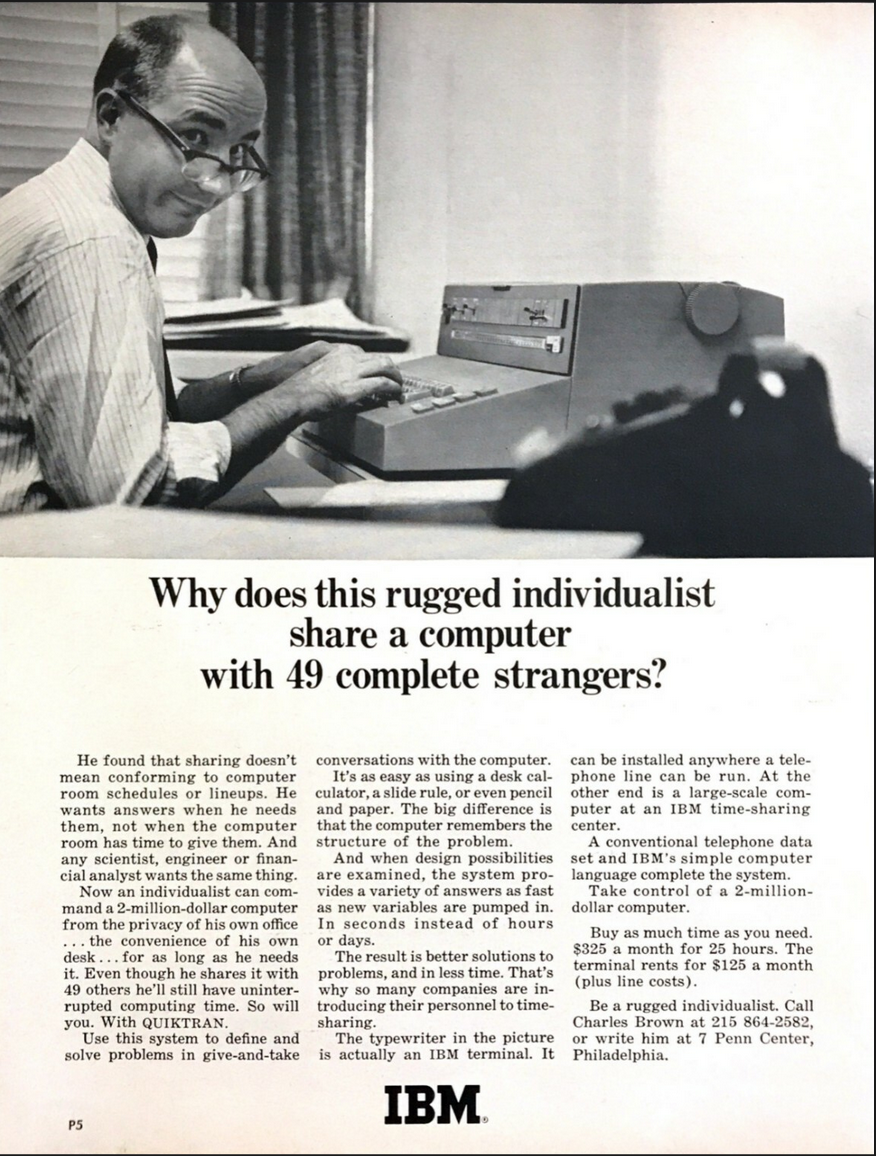
Time-sharing allocated a computer’s resources across numerous programs enabling “multi-tasking” for the first time. Now, computers could quickly cycle through each running program, performing a bit of each until everything was completed.
Operating systems were a user-focused interface for operating the computer. They provided the tools to perform common tasks such as creating, moving or editing files. This led to the prominent “server-client” model where a single computer was shared across multiple "terminals".
People connected to a shared computer system through a personal interactive device. Terminals consisted of a keyboard with printer or display that transmitted data over a cable.
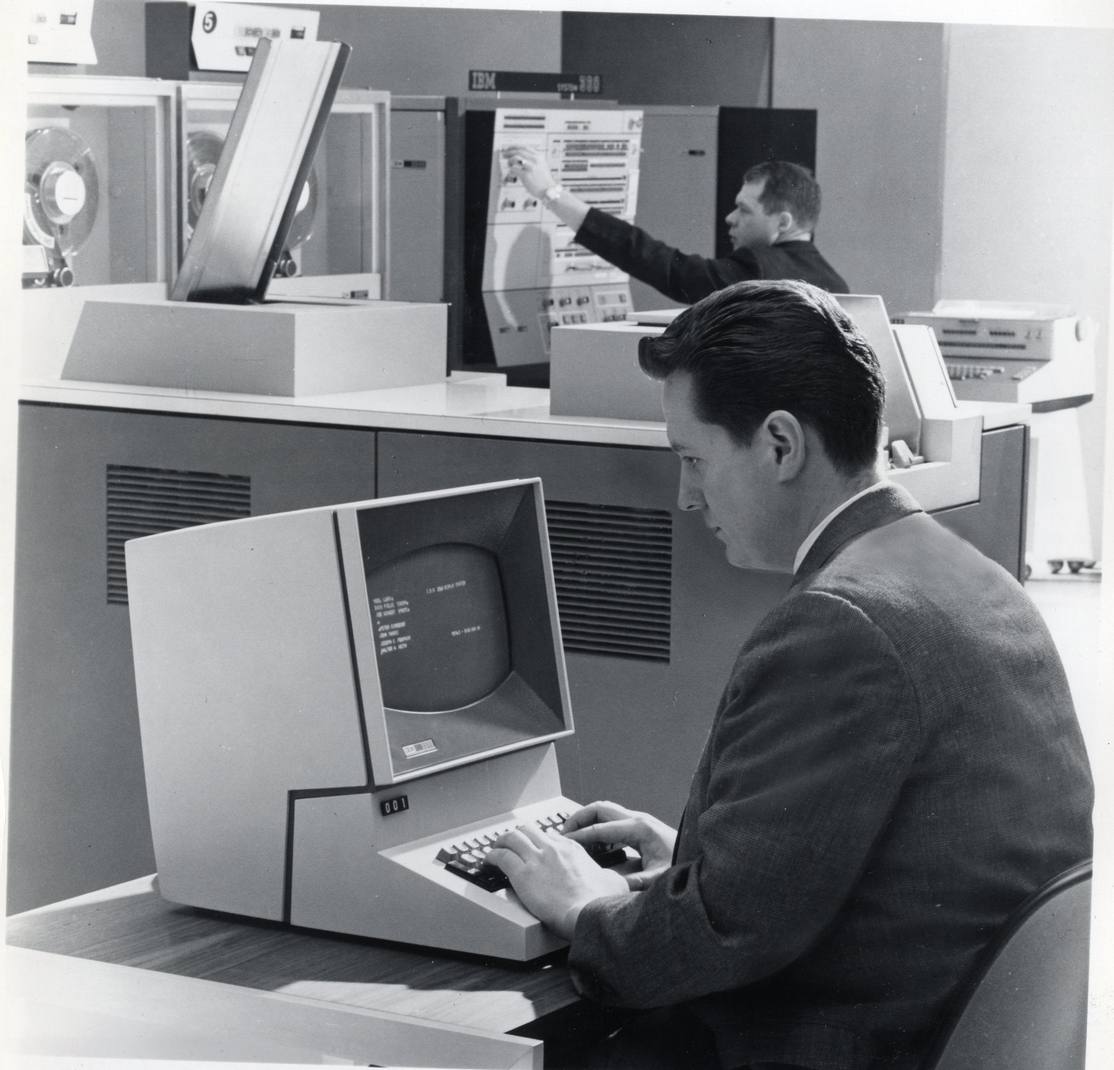
This marked the first time that software could be programmed directly on a computer instead of using punch cards. Time-sharing created the appearance of a “personal computer” when, in reality, terminals were accessing a shared system. To this end, most people didn’t even realize that the computer system wasn’t their own. This was by design. Before the Internet, we had started exploration into our manifestation of the modern "Cloud".
Newer digital computers sought to define a system that could support rapid technical development. Computers rely heavily on abstraction — or simplifying complex mechanisms in order build modular systems. This creates independent parts each completing their own complex task invisibly of the others. They communicate with each other through a common technical language to complete an end goal.
Time sharing was expanded to create "virtualization" by dividing a single computer into multiple virtual computers. A virtual machine creates a new sub-system for each “client” according to the “host” system's rules. This meant powerful mainframe computers could emulate smaller fully-featured systems, from the hardware up, that were indistinguishable.